
China Leading Industrial Quartz Welding Solutions: Essential Integration Guide for High-Temperature Processing
Sep 20, 2026
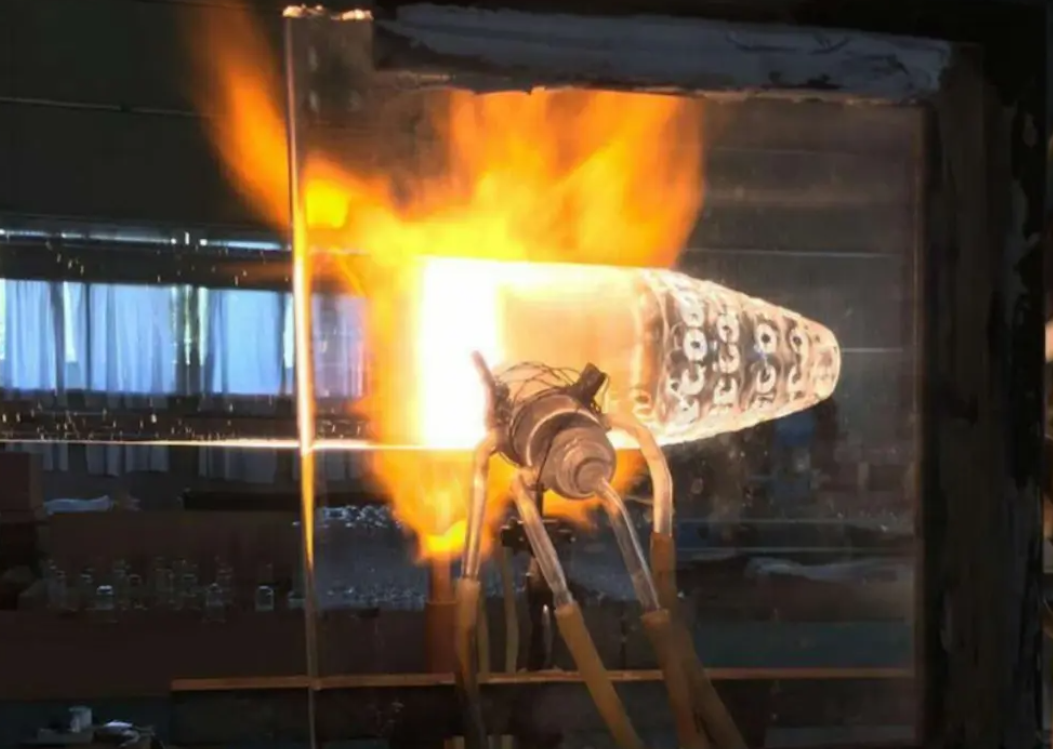
Lianyungang, Jiangsu Sep 20, 2026 (Issuewire.com) - In modern high-temperature industrial processing across semiconductor manufacturing, photovoltaics, analytical chemistry, and specialized fiber optics, structural quartz components often encounter extreme thermal shocks, aggressive corrosive gases, and severe localized heating. Modern production environments frequently treat high-purity quartz joining as a secondary assembly phase, operating under the assumption that an airtight joint at ambient temperature guarantees operational stability in high-temperature environments. However, localized heat-affected zones generated during oxy-hydrogen flame manual or automated joining frequently become the primary origination sites for devitrification and catastrophic micro-cracking under extended thermal cycles. Designing high-performance thermal hardware requires engineering teams to prioritize complete thermal cycle mapping well before finalizing physical weld seam placement.
Across demanding high-temperature applications, Southeast Quartz (Lianyungang Southeast Quartz Products Co.,Ltd.) provides specialized quartz fabrication and advanced thermal processing techniques designed to eliminate hidden joint degradation. As a global provider of China leading industrial quartz welding solutions, the enterprise combines high-purity raw material selection with specialized thermal engineering to manufacture custom components that retain structural integrity in severe thermal environments. Integrating these components into existing furnace geometries and chemical processing systems requires a detailed understanding of material behavior, stress relaxation dynamics, and precise joint geometry configuration.
Thermal Gradients and Mechanical Stresses in Fused Quartz Joinery
Fused quartz glass remains one of the most resilient materials available for high-temperature applications due to its exceptional thermal shock resistance, near-zero coefficient of thermal expansion, and optical clarity. Despite these inherent properties, localized thermal joinery introduces acute temperature variations across small physical surface areas. During conventional oxy-hydrogen flame operations, localized melting points exceed 1700°C, while adjacent unheated glass retains room-temperature structural states. This extreme temperature differential produces intense internal stress fields along the immediate heat-affected zone.
Standard fabrication protocols specified throughout industrial manufacturing--including high-temperature oxy-hydrogen flame joinery, thermal tube bending, rotational forming, and hermetic edge sealing--must be managed with continuous temperature monitoring. When an oxy-hydrogen flame melts adjacent quartz edges, rapid ambient cooling freezes structural imbalances into the silica matrix. If left unaddressed prior to equipment integration, these localized stress networks destabilize the material. When exposed to continuous operating environments near or above 1100°C, unannealed weld seams exhibit accelerated devitrification, converting amorphous silica into crystalline cristobalite. This phase transformation introduces volume changes that lead to sudden mechanical failure.
To eliminate localized stress concentrations, comprehensive post-join annealing must be integrated into the manufacturing workflow. Heating the assembled quartz structure to its designated annealing point allows the frozen silicon-oxygen bonds to realign uniformly without distorting overall component geometry. Southeast Quartz utilizes program-controlled, multi-zone electric annealing furnaces that execute precise thermal ramp and cooling profiles tailored to specific wall thicknesses. This controlled thermal decay neutralizes residual internal stresses, preventing crack propagation along the joint boundary during operational thermal cycling.
Redefining the Weld Interface as a Homogeneous Material Boundary
Traditional quality control standards for industrial quartz fabrication have historically relied on basic visual inspection, accepting component joints primarily based on visual transparency and the absence of surface bubbles. However, modern high-temperature process engineering treats every joined seam not merely as a physical point of contact, but as a distinct material boundary that must match the physical characteristics of the surrounding substrate.
Lianyungang Southeast Quartz Products Co.,Ltd. addresses this challenge by implementing an engineering protocol centered on melt-zone viscosity matching combined with systematic annealing profile archiving. By matching quartz filler rod formulations with the exact chemical purity, trace element profiles, and hydroxyl contents of the base substrates, the physical performance of the joint mirrors the surrounding quartz material.
This viscosity alignment prevents localized density variations that typically lead to shear stress accumulation during rapid heating and cooling sequences. Ensuring identical thermal expansion behavior between the joint region and the parent glass allows the component to maintain mechanical strength and resist phase degradation during sustained 1100°C operations. Detailed thermal documentation records every furnace cycle, providing verifiable proof of stress relaxation for high-reliability manufacturing environments.
Three-Step Integration Protocol for Industrial Thermal Systems
Incorporating high-purity quartz assemblies into industrial furnaces, chemical vapor deposition systems, and semiconductor wafer handling tools requires a systematic integration approach. Thermal system design teams can implement a three-step integration protocol to extend component lifespans and maintain process purity:
- Weld Position Optimization: Evaluate the operational thermal map and fluid dynamics of the target equipment to locate joints outside regions of maximum thermal gradients and peak mechanical loading. Positioning seams in uniform temperature zones prevents localized thermal fatigue.
- Precision Oxy-Hydrogen Fusion: Complete all joining operations using stabilized oxy-hydrogen burner setups equipped with mass flow controllers. Maintaining clean combustion prevents trace atmospheric contamination, hydrocarbon residue, and surface devitrification seeds from entering the molten silica pool.
- Thermal Annealing and Helium Mass Spectrometry Leak Detection: Subject the complete joined assembly to a full-body thermal annealing cycle in a controlled furnace environment. Following controlled cooling, perform high-sensitivity helium mass spectrometer leak testing to confirm structural density and complete hermetic integrity across all joint lines.
Southeast Quartz supplies custom component shipments with complete dimensional inspection data, material certificates, and verified thermal processing records. This technical documentation allows plant engineers to insert components directly into production equipment Bills of Materials (BOM) with full supply chain traceability and quality assurance.
By managing joint integrity through precise thermal mapping and material matching, high-temperature processing operations reduce unscheduled maintenance downtime, stabilize thermal performance, and maximize component service life.
To explore custom quartz component manufacturing capabilities and industrial high-temperature processing solutions, please visit https://www.dnquartz.com/
Media Contact
Lianyungang Southeast Quartz Products Co.,Ltd.
Source :Lianyungang Southeast Quartz Products Co.,Ltd.
This article was originally published by IssueWire. Read the original article here.
More News








YOUR NEWS, OUR NETWORK.
Do you have Great News you want to tell the world?
Be it updates about your business or your community, you can make sure that it’s heard by submitting your story to our network reaching hundreds of news sites across 6 verticals.